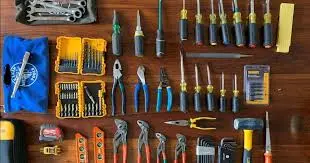
Ask ten electricians what belongs in an apprentice's first tool bag and you'll get ten overlapping lists — and one point of total agreement: buy the safety-critical items properly, buy the rest sensibly, and let the job teach you what to add. This is the list we'd hand a first-year apprentice, in the order the tools earn their keep.
The non-negotiables: testers
Everything else on this list is about working efficiently. These two are about going home at night:
- Two-pole voltage tester. The tool you use to prove a circuit dead before touching it. Buy a quality unit from a reputable test-equipment brand, learn the prove-test-prove routine (verify the tester on a known live source, test the circuit, verify the tester again), and treat it as the most important object you own.
- Non-contact voltage detector. The pen-style detector is a quick first check — great for tracing and sanity checks, never sufficient by itself to declare anything dead.
The daily drivers
You'll hold these tools thousands of hours over a career, so mid-range quality from established brands pays for itself in comfort alone. Insulated (VDE-rated) versions are the right default for all of them:
- Combination pliers — gripping, twisting, cutting; the workhorse.
- Side cutters (diagonal pliers) — clean cuts in copper conductors; don't abuse them on steel.
- Long-nose pliers — loops, tight spaces, holding small parts.
- Wire strippers — an adjustable or automatic stripper that doesn't nick conductors. Nicked copper breaks; broken conductors in terminals cause the loose-connection faults behind half the service calls you'll ever run. (Our guide on connecting wires correctly shows what good terminations look like.)
- Screwdriver set — insulated flat and cross-head/pozi in the sizes your local hardware actually uses, plus the small terminal screwdriver you'll use fifty times a day.
Measuring and marking
- Tape measure and a spirit level (a short torpedo level fits the bag; accessories mounted crooked follow you around forever).
- Multimeter. Continuity, resistance, voltage — the fault-finder's basic instrument. A reliable mid-range meter from a recognised brand beats a cheap unit whose readings you can't trust.
- Permanent markers and electrical tape in several colors for temporary identification — plus a habit of labelling everything you disconnect.
Installation work
- Utility knife for sheathing — used carefully, away from the conductor insulation.
- Fish tape / draw wire for pulling cables through conduit and voids.
- Hacksaw or cable saw, hammer, and a chisel for chasing and fixing work.
- Cordless drill/driver — often the first power tool worth your own money; batteries and platform matter more than the bare tool, so pick a system you can grow with.
- Headlamp. Ceiling voids, cupboards and panels are dark, and both your hands will be busy.
Carrying it all
A beginner doesn't need a rolling workshop; a well-organised bag or backpack that keeps testers protected and hand tools findable is enough. When you're ready to invest, we've reviewed Klein's tool bag range — the organisational habits matter more than the brand.
The buying strategy that saves money
- Buy safety-critical items new and from reputable brands — testers and insulated tools. No marketplace bargains, no hand-me-downs of unknown history.
- Buy the daily drivers mid-range. The price difference between junk and solid pro tools is small compared to the difference in how they hold up.
- Wait on specialty tools. Crimpers for every terminal family, SDS drills, conduit benders — let actual jobs justify them. Ask journeymen what they reach for; borrow before you buy.
- Mark your tools and inventory them. Tool loss on sites is death by a thousand cuts for an apprentice's wallet.
Note: tool requirements and safety rules vary between countries and employers — your training provider's list and your local regulations take precedence. Insulated tools and testers must carry the certification marks recognised where you work.