Electrical systems rarely fail without warning. Before a connection burns, it buzzes; before a cable ignites, it trips breakers; before a shock, there's often a tingle someone dismissed. Safety bodies such as the Health and Safety Executive, ESFI and Electrical Safety First publish decades of evidence saying the same thing: most electrical incidents are preceded by visible, audible or smellable warnings. Here are twelve worth walking your home for this weekend.
The checklist
1. Breakers that trip repeatedly
A one-off trip is protection doing its job. A pattern is a message — overload, a failing appliance or a wiring fault. Our guide to why breakers keep tripping walks through the causes; the rule that matters is never upsizing a breaker to silence it.
2. Warm or discolored outlets and switch plates
Faceplates should be room temperature. Warmth, brown scorch marks or a plasticky smell mean a connection behind the plate is heating — one of the strongest "call an electrician this week" signs on this list.
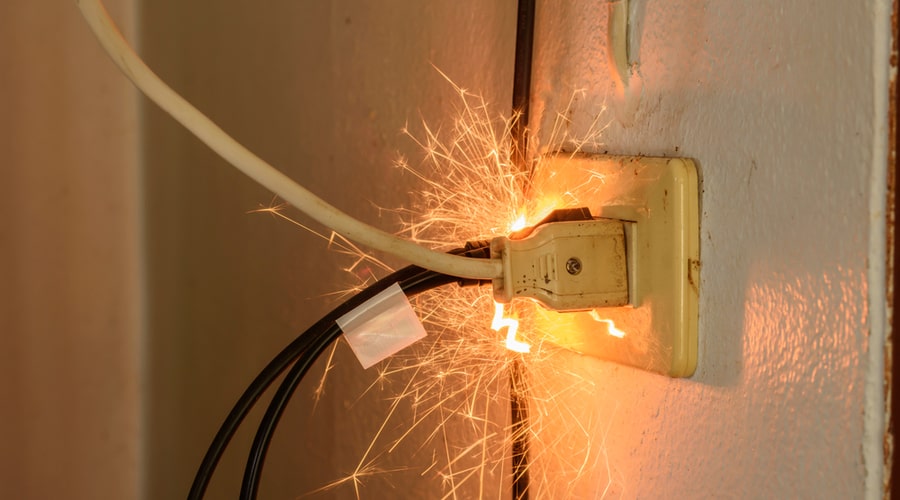
3. Sparking when you plug in
A tiny blue flash as pins meet contacts can be normal, but regular, loud or yellow-orange sparking is not. We've covered the seven reasons sockets spark — worn contacts and loose terminals top the list.
4. Buzzing, sizzling or crackling sounds
Electricity done right is silent. Buzzing from an outlet, switch or the panel itself usually means arcing or a loose connection. Sizzling or crackling is an emergency: switch the circuit off and call a professional.
5. Persistent burning smell you can't locate
Overheated PVC insulation has a distinctive acrid, fishy-plastic smell. If it comes and goes with a particular circuit's use and you can't find the source, treat it as urgent.
6. Flickering or dimming lights
A single flickering lamp is usually the lamp (see why LEDs flicker). Whole rooms dimming when appliances start, or house-wide flicker, points at connections or the incoming supply — professional territory, promptly.
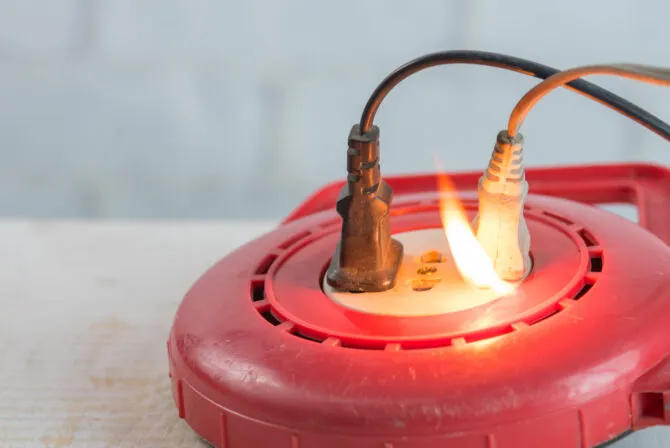
7. Extension leads that became furniture
Cords under rugs, daisy-chained power strips, a heater on an extension lead: each one is on the fire statistics' greatest-hits list. Our extension cord safety guide covers the rules; the structural fix is more outlets.
8. Damaged cords and plugs
Cracked sheaths, taped-over repairs, bent pins, plugs that hang loose in the socket. Damaged flexible cords are among the most common ignition sources — and the cheapest to fix. Replace, don't tape.
9. No residual-current protection
RCDs, RCBOs or GFCIs — whatever your region calls them — cut power in milliseconds when current leaks through insulation or a person. If your panel predates them or your bathroom and outdoor sockets aren't protected, that's a high-value upgrade. Test existing devices with their TEST button regularly; a device that won't trip is a device that won't save you. (Confused by the acronyms? RCD, RCBO and GFCI differences.)
10. Two-prong outlets, missing earths and DIY history
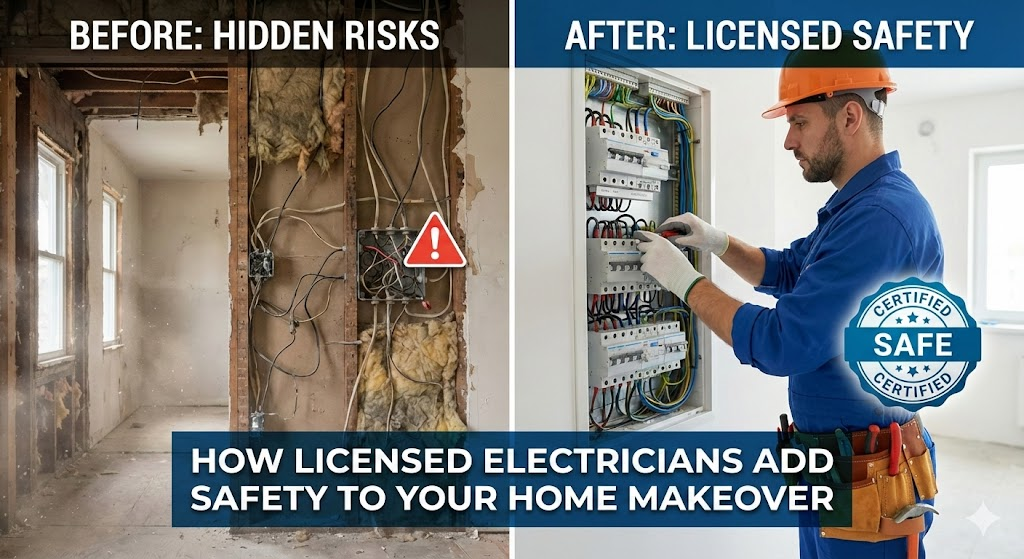
Older homes accumulate sins: outlets without earth connections, junctions buried in walls, mystery cables and renovations done by the previous owner's cousin. If your home is decades old and has never had a professional inspection, book one — it's the electrical equivalent of a health check-up.
11. Shocks and tingles
Any tingle from an appliance, tap or metal surface is a serious warning of an earthing or leakage problem. Stop using the equipment and get professional help immediately.
12. Water near electricity
Sockets reachable from the shower, extension leads across the garden in the rain, appliances on wet floors, signs of leaks above the panel or meter. Water turns minor faults into fatal ones; separation, protection and outdoor-rated equipment are non-negotiable.
What to do with your findings
- Emergencies (sizzling sounds, burning smells, shocks): switch off the affected circuit at the panel and call an electrician now.
- This-week items (warm plates, repeated tripping, sparking, no RCD protection): book a licensed electrician.
- DIY-safe fixes: replacing damaged appliance cords with manufactured spares, retiring abused extension leads, testing RCD buttons, and redistributing loads across sockets. Everything involving fixed wiring — even "just" swapping a socket in many jurisdictions — belongs to a professional.
Safety note: this checklist helps you notice problems, not fix them. Electrical regulations differ by country, and work that is legal DIY in one place is prohibited in another. When in doubt, a licensed electrician is always the right answer.