A circuit breaker that trips once in a while is a minor annoyance. A breaker that trips again and again is a message from your electrical system — and the worst response is to fight the messenger by holding it closed, taping it, or swapping in a bigger breaker. This guide walks through the seven most common causes of repeated tripping, roughly in order of likelihood, and explains which ones you can address yourself.
If you want a refresher on what the device actually does, start with our guide to circuit breaker types and functions.
1. Circuit overload
The most common cause by far. Every circuit is designed for a maximum continuous current; plug in a kettle, space heater and microwave on the same kitchen circuit and you exceed it. The breaker's thermal element heats up and trips — usually seconds to minutes after the load appears, not instantly.
What to do: unplug some of the load and reset the breaker. If the same circuit regularly can't cope with normal life, that's not a fault to work around — it's a sign the installation needs additional circuits, which is an electrician's job.
2. Short circuit
A live conductor touching neutral (or another live) creates a very large fault current, and the breaker's magnetic element trips instantly — often with a distinct snap the moment you reset it. Common culprits are damaged appliance cords, crushed cables, failed devices and loose strands in terminals.
What to do: if the breaker trips the instant you reset it with everything unplugged, stop. This is a wiring fault, and locating it safely requires test equipment and training. Instant re-tripping is a "call a licensed electrician" situation, full stop.
3. Earth leakage (if the device is an RCBO or GFCI breaker)
If your "breaker" also provides residual-current protection — an RCBO in European panels, a GFCI breaker in North American ones — it will also trip when current leaks to earth. Moisture in an outdoor fitting, a degraded heating element or a damaged cable can all cause leakage without any overload. Our comparison of RCDs, RCBOs and GFCIs explains how to tell these devices apart.
What to do: unplug appliances on the circuit one at a time and see which one's return brings the tripping back. Water heaters, washing machines and outdoor equipment are frequent offenders. Fixed-wiring leakage needs professional diagnosis with an insulation tester.
4. A failing appliance
Motors with worn bearings draw ever-higher current; failing compressors stall and pull locked-rotor current; degraded heating elements leak to earth. If tripping started around the time one appliance began misbehaving — or only happens when that appliance runs — you likely have your answer.
What to do: run the suspect appliance on a different circuit (where safe) or have it tested. Repair or replace the appliance rather than touching the electrical panel.
5. Inrush current from motors and equipment
Air conditioners, compressors, power tools and even large LED drivers draw a brief surge of current at switch-on that can be several times their running current. If a breaker trips at the moment equipment starts but holds fine afterwards, inrush may be tripping the magnetic element of a breaker with a fast trip curve.
What to do: this is a design question — breakers come in different trip characteristics for exactly this reason, and matching curve to load is an electrician's decision. Don't simply fit a bigger breaker; the cable it protects hasn't gotten any bigger.
6. Loose or corroded connections
A loose terminal creates localized heating, and heat is what a breaker's thermal element measures. Loose connections can also arc, which trips arc-fault-detecting devices where fitted. Warm outlet faceplates, buzzing sounds or why sockets spark alongside the tripping raise the suspicion further.
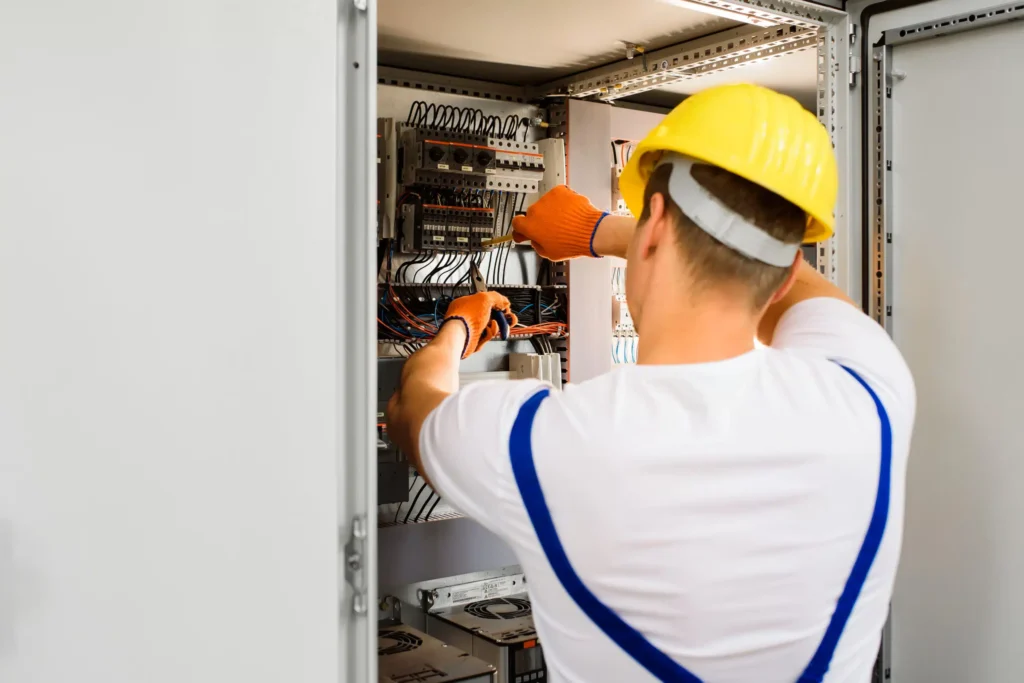
What to do: loose connections are a fire risk and belong to a professional. An electrician will inspect terminations on the circuit — including inside the panel, where DIY hands should never go.
7. The breaker itself is worn out
It's the least common cause, which is why it's last: breakers do age, especially ones that have interrupted many heavy faults or live in hot, humid or dusty panels. A worn breaker may trip below its rating or fail to reset cleanly.
What to do: replacement is quick work for an electrician — and while the panel is open, they can check whether the rest of the installation shows the same wear.
How to narrow it down before you call
- Note the timing. Instant trip on reset points to a short; delayed trip points to overload; trips coinciding with one appliance point to that appliance.
- List what's on the circuit. Unplug everything, reset, and reconnect one device at a time.
- Check the device type. A tripped RCBO/GFCI tells a different story than a plain breaker.
- Never upsize the breaker. The breaker protects the cable in the wall. A larger breaker on the same cable removes that protection and creates a fire hazard.
Safety note: resetting a breaker and unplugging appliances is safe for anyone. Everything beyond that — opening the panel, testing conductors, replacing devices — requires a licensed electrician. Electrical safety organisations such as ESFI publish homeowner guidance if you want to go deeper on the warning signs.