The extension cord is the most abused piece of electrical equipment in existence. It's designed as a temporary convenience, yet millions of them spend years pinned under sofas, coiled behind entertainment units and daisy-chained through workshops. Safety organisations such as the Electrical Safety Foundation International consistently list extension cords among the leading causes of home electrical fires — almost all of them preventable with a handful of habits.
How an extension cord becomes a fire
Every cord has a maximum current it can carry continuously without overheating, set by the size of its conductors. Push more current through it and the copper heats. Three factors quietly push cords past their limits:
- High-power appliances. Heaters, kettles, irons, air conditioners and power tools each draw as much as an entire lighting circuit. A thin cord feeding a space heater is the classic fire scenario.
- Heat with nowhere to go. A coiled or covered cord can't shed heat. The same load that's fine on a straight, open cord can melt insulation on a coiled one — which is why cable reels carry two ratings, coiled and uncoiled.
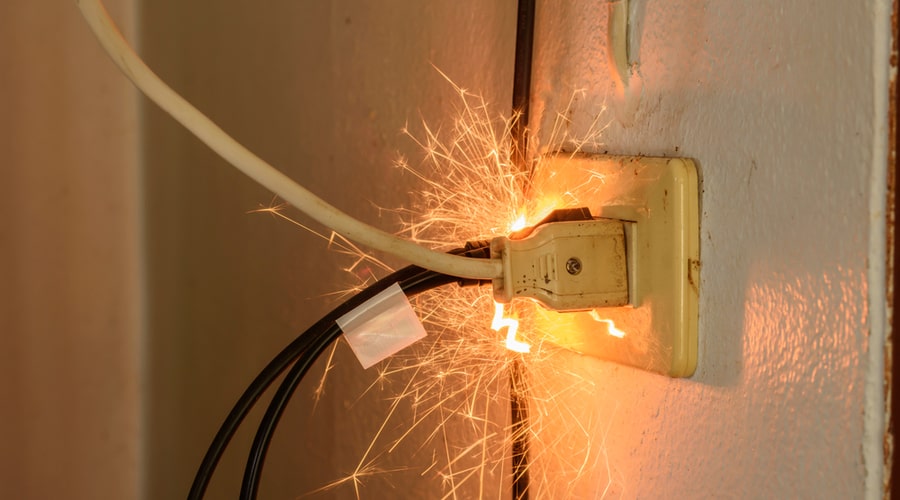
- Accumulated damage. Crushed under furniture, pinched in doors, yanked out by the cord — damaged insulation and broken strands raise resistance and create hot spots and arcing. Damage is also a major cause of sparking at the socket.
Choosing the right cord
- Match the rating to the load. Add up the wattage of everything the cord will feed and stay comfortably under the cord's rating. If you don't know the rating, don't use the cord for anything that heats, cools or has a motor.
- Thicker is better for long runs. Voltage drop grows with length; long thin cords starve motors and heat up. For long runs choose a larger conductor size.
- Outdoor work needs outdoor cords. Look for an outdoor rating, and pair outdoor use with RCD/GFCI protection — either a protected socket, a plug-in device or the protection in your panel. Our guide to RCDs and GFCIs explains the options.
- Buy certified. Counterfeit and uncertified cords with undersized conductors are common in online marketplaces. Buy cords carrying a recognised certification mark from reputable sellers.
The rules that prevent most incidents
- Never daisy-chain cords or power strips into each other.
- Never run cords under carpets, rugs or doors — they get damaged, and heat can't escape.
- Uncoil fully before loading a cable reel or long lead.
- Keep one heater = one wall socket. Heating appliances shouldn't share cords or strips with anything.
- Grip the plug, not the cable when unplugging.
- Inspect before use: cracked sheath, bent pins, discoloration around the plug, or any warmth during use disqualify the cord.
- Keep them temporary. A cord that has become permanent infrastructure is a sign you need more outlets.
Signs you need more outlets, not more cords
Extension leads multiplying across a room are the symptom; too few circuits and sockets are the disease. If your household runs on power strips, a licensed electrician can add outlets and, where needed, circuits — a modest job compared with the fire it prevents. Persistent overload symptoms like a breaker that keeps tripping make that conversation urgent.
Safety note: guidance here is general good practice. Requirements for outdoor use, residual-current protection and workplace use differ by country — the UK's Health and Safety Executive and ESFI publish detailed regional guidance. Installation work belongs to licensed electricians.