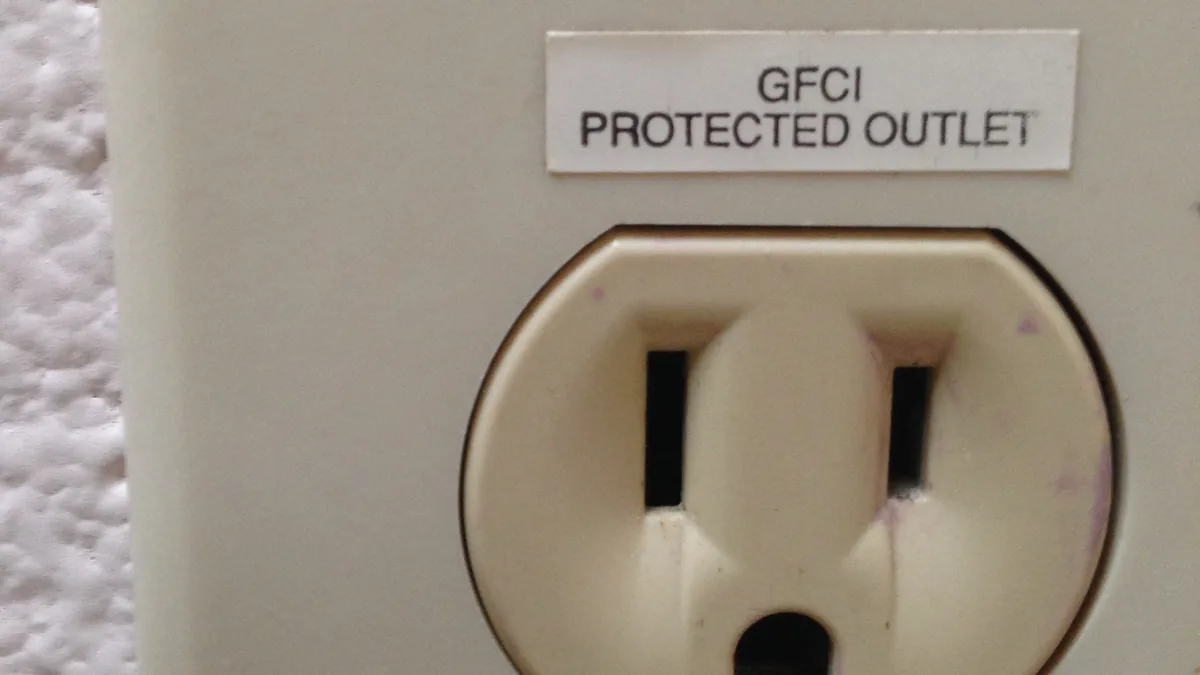
A GFCI and an AFCI can sit side by side in the same panel, have the same TEST button and cost about the same, yet they are looking for two completely different faults. One is there to stop you getting a shock. The other is there to stop the wiring inside your walls from starting a fire. Mix them up and you can end up with a kitchen that trips for no clear reason, or a bedroom circuit with the wrong protection on it.
This guide explains what each device senses, where each one belongs and how to choose between a breaker, a receptacle and a dual-function unit.
The Short Answer
A GFCI (ground-fault circuit interrupter) protects people from electric shock. An AFCI (arc-fault circuit interrupter) protects the building from fires that start in wiring and cords. Neither replaces the ordinary overcurrent function of a breaker, which handles overloads and short circuits.
| GFCI | AFCI | |
|---|---|---|
| Protects against | Electric shock and electrocution | Fires caused by arcing |
| What it senses | Current leaving the circuit and returning through ground | The waveform pattern of an electrical arc |
| Typical trip point | About 4 to 6 mA of leakage | Arcing signature, not a single current value |
| Usual locations | Wet or damp areas and outdoors | Bedrooms, living areas and most habitable rooms |
| Available as | Breaker, receptacle, portable cord unit | Breaker, receptacle |
| Needs a ground wire | No | No |
How a GFCI Works
Inside a GFCI, the hot and neutral conductors pass through a small sensing coil. In a healthy circuit the current going out on the hot equals the current coming back on the neutral, so the two cancel out. If some of that current takes another route, through a wet tool housing, a damaged cord or a person, the two no longer match. The device sees the difference and opens the circuit.
A Class A GFCI, the type used to protect people, trips when the difference reaches roughly 4 to 6 milliamps, and it does so in a fraction of a second. That is fast enough and sensitive enough to cut the power before a shock through the body becomes lethal. A standard 15 or 20 amp breaker would never notice a fault that small.
Because it only compares two conductors, a GFCI does not rely on the grounding wire. The same principle is used worldwide under other names, and our comparison of RCD, RCBO and GFCI devices sets out how the North American and European versions line up.
How an AFCI Works
An arc is current jumping a gap. It happens when a conductor is nicked by a staple, when a cord is crushed behind furniture, when a connection works loose at a receptacle or when insulation breaks down with age. The arc can run at a current well below the breaker rating, so the breaker stays on while the arc heats the surrounding material until it ignites.
An AFCI uses electronics to watch the shape of the current waveform. Arcing leaves a noisy, irregular pattern that differs from the pattern of a normal load, and when the device recognizes it for long enough, it trips. There are two kinds of arc it looks for:
- Parallel arcs between hot and neutral or hot and ground, for example where a nail has bridged two conductors.
- Series arcs along a single conductor, for example a broken strand in a cord or a loose terminal screw.
A combination-type AFCI detects both. The word "combination" causes endless confusion, because it does not mean AFCI combined with GFCI. Some AFCI breakers do include a degree of ground-fault sensing, but at a level meant to protect equipment and wiring, not people.
The technology has limits and critics, particularly on the European side where the equivalent device is the AFDD, and our article on where arc fault detection falls short covers that debate.
Where Each One Is Typically Required
In the United States, requirements come from the National Electrical Code (NFPA 70), which is revised every three years. States and cities adopt different editions, sometimes with their own amendments, so the list for your address may be shorter or longer than the one below. Treat it as the general pattern and confirm the details with your local building department or a licensed electrician.
GFCI protection follows water and bare ground. It is normally expected for receptacles in:
- Bathrooms
- Kitchens, especially countertop receptacles and those near a sink
- Garages and unfinished basements
- Outdoor locations, crawl spaces and boathouses
- Laundry areas and anywhere within a short distance of a sink, tub or shower
AFCI protection follows the rooms where people live and sleep. It began with bedroom circuits and later editions extended it to living rooms, dining rooms, hallways, closets, family rooms and similar spaces, then to kitchens and laundry areas. In a new house built to a recent edition, most 120 volt, 15 and 20 amp circuits end up with AFCI protection, and several of them need GFCI protection as well.
Older homes are a different matter. If your house predates these rules, the items in our home electrical safety checklist will help you decide which upgrades to do first.
Breaker, Receptacle or Dual Function?
Both kinds of protection can be fitted at the panel or at the first receptacle on the circuit, and each approach has a use.
- GFCI receptacle. The cheapest way to add shock protection to an existing circuit. Wired through its LOAD terminals, it also protects every receptacle downstream. The reset button is right where the trip happens, which is handy in a bathroom.
- GFCI breaker. Protects the entire circuit, including the cable from the panel. A good choice for outdoor circuits, where a receptacle-type device would sit in the weather, and for circuits with no convenient first receptacle.
- AFCI breaker. The standard method for arc protection because it covers the whole branch circuit from the panel onward.
- AFCI receptacle. Useful in older houses when the panel cannot take AFCI breakers. It protects the wiring and cords downstream of itself, so it needs to be the first device on the run.
- Dual-function breaker. AFCI and GFCI in one unit. It saves space and avoids stacking a GFCI receptacle on an AFCI breaker in rooms that need both.
Whichever you choose, the breaker has to be listed for the panel it goes in. Brands are not interchangeable just because a breaker physically clips onto the bus. If breaker families and ratings are new to you, start with our overview of circuit breaker types and their functions.
How to Test Them
Both devices have a TEST button, and manufacturers ask you to use it monthly. The routine takes a minute:
- Plug a lamp or a night light into a receptacle on the protected circuit and switch it on.
- Press the TEST button on the breaker or receptacle. You should hear a click and the lamp should go out.
- For a breaker, push the handle fully to OFF and then back to ON. For a receptacle, press RESET.
- Check that the lamp comes back on.
If the lamp stays on after you press TEST, the device is not protecting anything and should be replaced. The same applies if it will not reset with nothing plugged in. Many current GFCIs run a self-test and show a fault with an indicator light, but the monthly button check is still worth doing.
Why They Trip When Nothing Seems Wrong
A trip is information. Before you blame the device, look at which type tripped, because the causes are different.
GFCI trips usually come down to moisture or leakage: a wet outdoor box, a receptacle cover that no longer seals, a water heater element or refrigerator compressor that is starting to fail, or a long circuit with many loads whose small individual leakages add up.
AFCI trips tend to come from wiring errors and worn equipment: a neutral shared between two circuits, a neutral touching ground somewhere downstream, a loose backstab connection at a receptacle, a damaged extension cord, or an older motor-driven appliance with worn brushes.
Unplug everything on the circuit and reset. If it holds, plug loads back in one at a time until it trips again. If it trips with nothing connected, the fault is in the fixed wiring and it is time to call an electrician. Our guide to why a circuit breaker keeps tripping walks through the process for standard breakers too.
Adding Protection to an Older House
You do not have to rewire a house to make it much safer. Swapping bathroom, kitchen, garage and outdoor receptacles for GFCI types is a modest job for an electrician and deals with the most serious shock risks first. It is also the accepted fix for old two-prong receptacles on circuits with no grounding conductor, as long as the new receptacles carry the "No Equipment Ground" label supplied in the box.
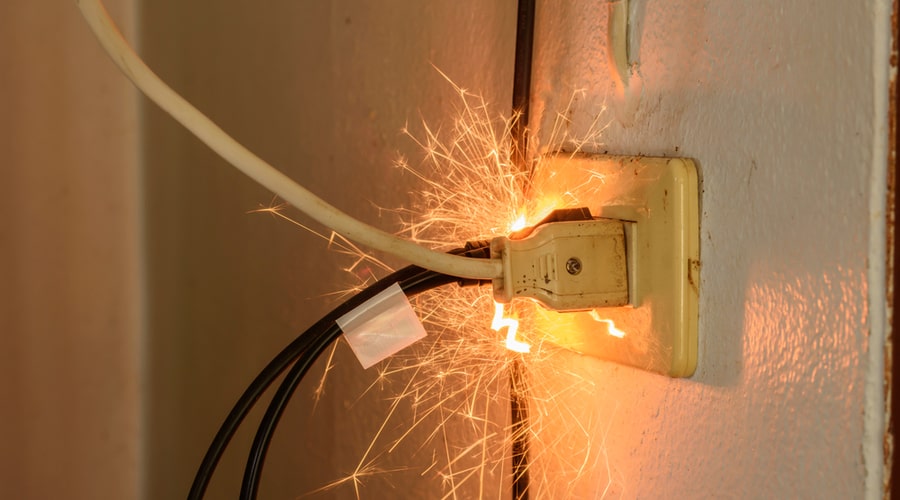
AFCI protection matters most in exactly the houses that lack it, where wiring and connections have had decades to deteriorate. Expect some investigation after fitting it. An AFCI that trips on an old circuit has often found a real defect, such as a scorched connection or a damaged cable, and tracing it is the point of installing the device. Warm faceplates, crackling sounds and brown marks are the same kind of warning, and we explain them in our piece on reasons a socket sparks.
Work inside a panel exposes live parts even with the main breaker off. Leave breaker changes to a licensed electrician, and get a permit where your jurisdiction asks for one.
Which One Do You Need?
Most houses need both, on different circuits. Put GFCI protection wherever water, concrete floors or the outdoors raise the risk of shock. Put AFCI protection on the circuits that feed the rooms you live and sleep in. Where a room calls for both, a dual-function breaker does the job in one slot. Then press the TEST buttons once a month, because a protective device that has quietly failed is no better than none.